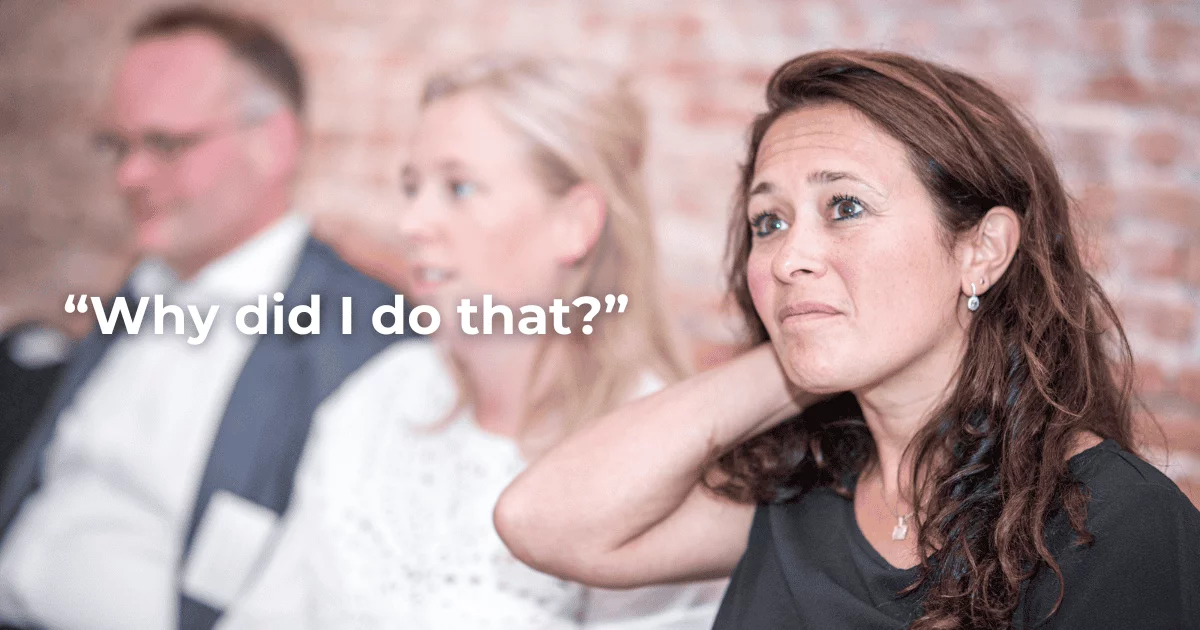
You walk into a meeting fully prepared. Your notes are ready to go. You know what you want to say.
And then it happens. Someone’s tone sharpens. Another raises their voice. The energy shifts. Suddenly your heartbeat feels louder than your thoughts, and your well-thought-out words disappear.
That’s emotional overshadowing – when strong feelings in the room drown out your voice. It happens to everyone, even confident leaders.
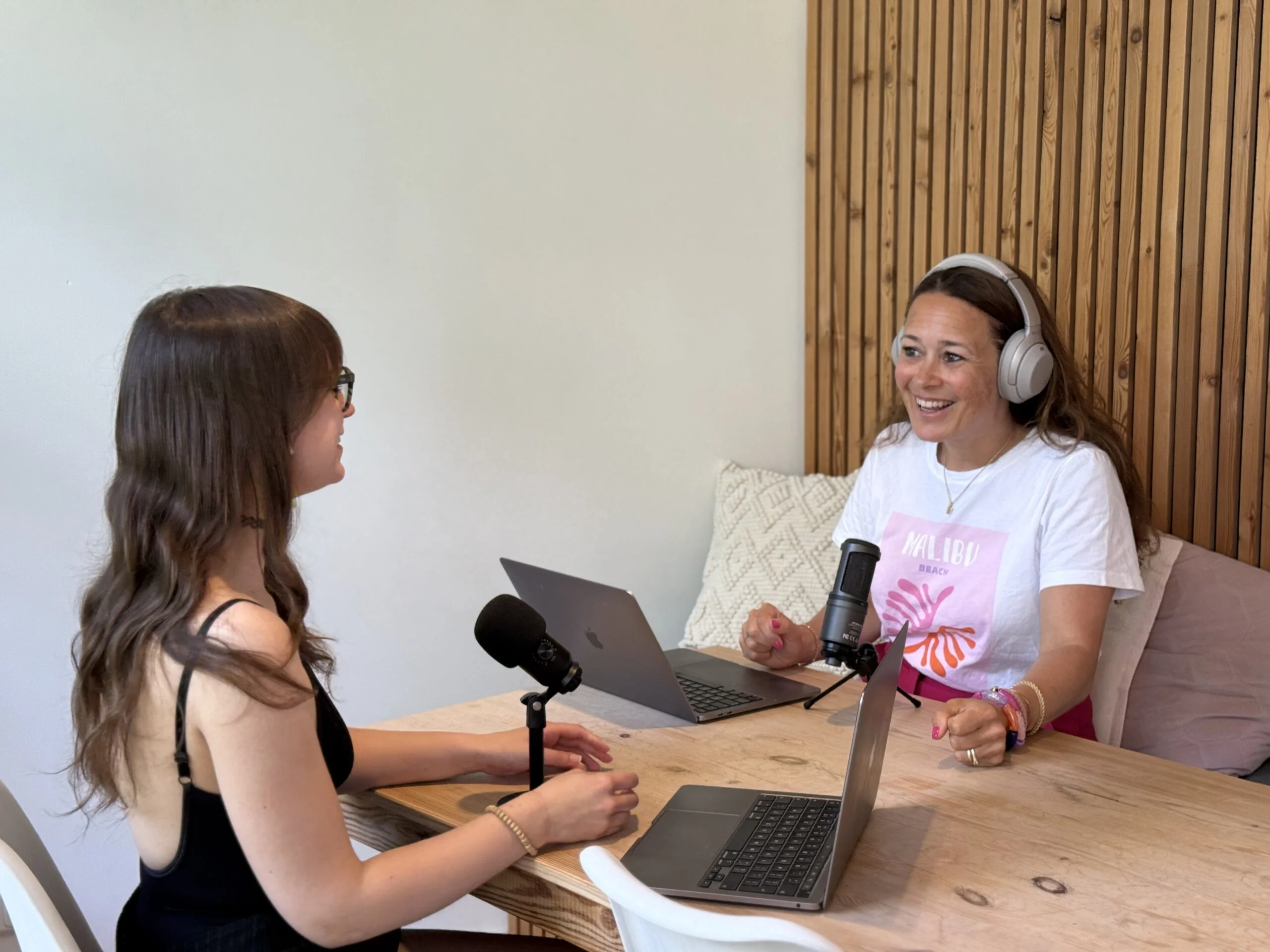
In Episode 5 of Beyond the Corporate Mask, Emma and Suzanne talk about this very moment: when group emotions or powerful voices take over, and your truth gets lost.
Everyday examples
Emotional overshadowing can show up almost anywhere:
- In a project review where the loudest opinion takes over, and you feel your point slipping away, unheard.
- On a client call where one strong personality dominates, and you stay quiet even though you had something to add.
- In a meeting where someone’s urgency fills the room, and you find yourself overwhelmed and fading into the background.
- At a family dinner where one relative’s strong opinion makes you hold back what you really think.
- When planning a trip with friends and, the most excited voice sets the plan, while your idea never gets acknowledged.
- In a moment with your child where their frustration is so strong that you drop what you wanted to say.
Maybe you’ve told yourself:
“This isn’t the right time.”
“They seem so sure… maybe I’m wrong.”
That’s not doubt. That’s emotional overshadowing.

How emotional overshadowing happens
Your brain and body are built to focus on safety. Without consciously thinking about it, you scan your surroundings: Am I safe here? Can I speak?
When emotions rise in a room, your nervous system reacts before your mind does. Your breath might go shallow, your throat tightens, or your stomach knots. Even when you feel your boundaries being crossed, your voice may not follow.
Science backs this up. Studies (like this one) show that we give more attention to emotionally charged signals than to calm ones; whether the emotion is anger, panic, or even excitement. The strong feeling pulls focus, while quieter voices fade.
Take Sarah’s story, which you can hear in Episode 5. She set a boundary, but the pushback was loud and emotional. And her own voice went quiet. That’s emotional overshadowing in action.
Reasons emotional overshadowing shows up
- Patterns in teams: Groups like predictability, so they push you back into old roles.
- Big emotions win attention: Our brains lock onto urgency faster than calm.
- Nervous system survival: Avoid, move towards, freeze, or collapse are all quick ways the body keeps us safe in moments of social threat.
- Power: Strong voices higher up in the ladder feel riskier to challenge.
It’s not that you failed; it’s human wiring. And the good news: you can change this!

The 3-Step Voice Reset
A simple and quick reset method to help you unfreeze and bring back your voice:
- Ground. Put both feet on the floor. Breathe in for 3 counts, out for 3. This calms your body and helps it to feel safe to speak up.
- Name it to tame it. Notice: “tight chest,” “shaky hands.” Identifying and naming makes it less overwhelming.
- Make small adjustments. Open your posture, uncross your arms, or place a hand on your centre (2 inches below the belly button). Movement shifts the freeze and frees your voice. Then say just one short line.
Phrases you can use
- “Can I add something here?”
- “I’d like to finish my point; it’s about X.”
- “I hear the urgency. I see it a bit differently: …”
These are some great options because they don’t fight the emotion that’s present. They add space for your voice.
Why addressing emotional overshadowing matters
It’s painful when your words disappear under the noise. You leave the room wishing you’d spoken up. But once you spot emotional overshadowing, you can change it.
Small steps (a breath, a shift, one clear line) bring your voice back. And when you do, you help your team hear more than just the loudest voice in the room.
That’s owning your own truth.
Ways to help address emotional overshadowing:
🎧 Listen to Episode 5 of our podcast, Beyond the Corporate Mask, for Sarah’s full story.
✨ Trying the 60-second centring method before your next meeting (as explained in the podcast).
🌿 Want to practise this in a safe space? Join our next Embodied Leadership Retreat, where we build voice and presence through somatic practice.